Six ARCs, three weeks, zero notes
ARC (Advance Review Copy) — a pre-publication copy of a book sent to reviewers by publishers, usually via NetGalley or Edelweiss, in exchange for an honest review posted around the release date.
You requested them because the covers were good and the blurbs were great and saying yes felt very on-brand for the kind of reader you want to be. Now there are six books on your NetGalley shelf, two on Edelweiss, the first deadline is in eighteen days, and your notes document is an empty file called "arc notes final.docx" that you opened once and immediately closed.
This is the normal ARC experience. Nobody talks about it because everyone's Bookstagram grid looks extremely organised and intentional. It is not. It is chaos with good lighting.
Here is a workflow that actually handles the chaos.
The problem with saving notes for later
The most common ARC mistake is planning to write the review after you finish. You tell yourself you'll remember the good bits. You won't. You'll remember that you liked it, or didn't, and maybe one scene vaguely, and then you'll sit down to write 300 words for NetGalley and your mind will be completely blank.
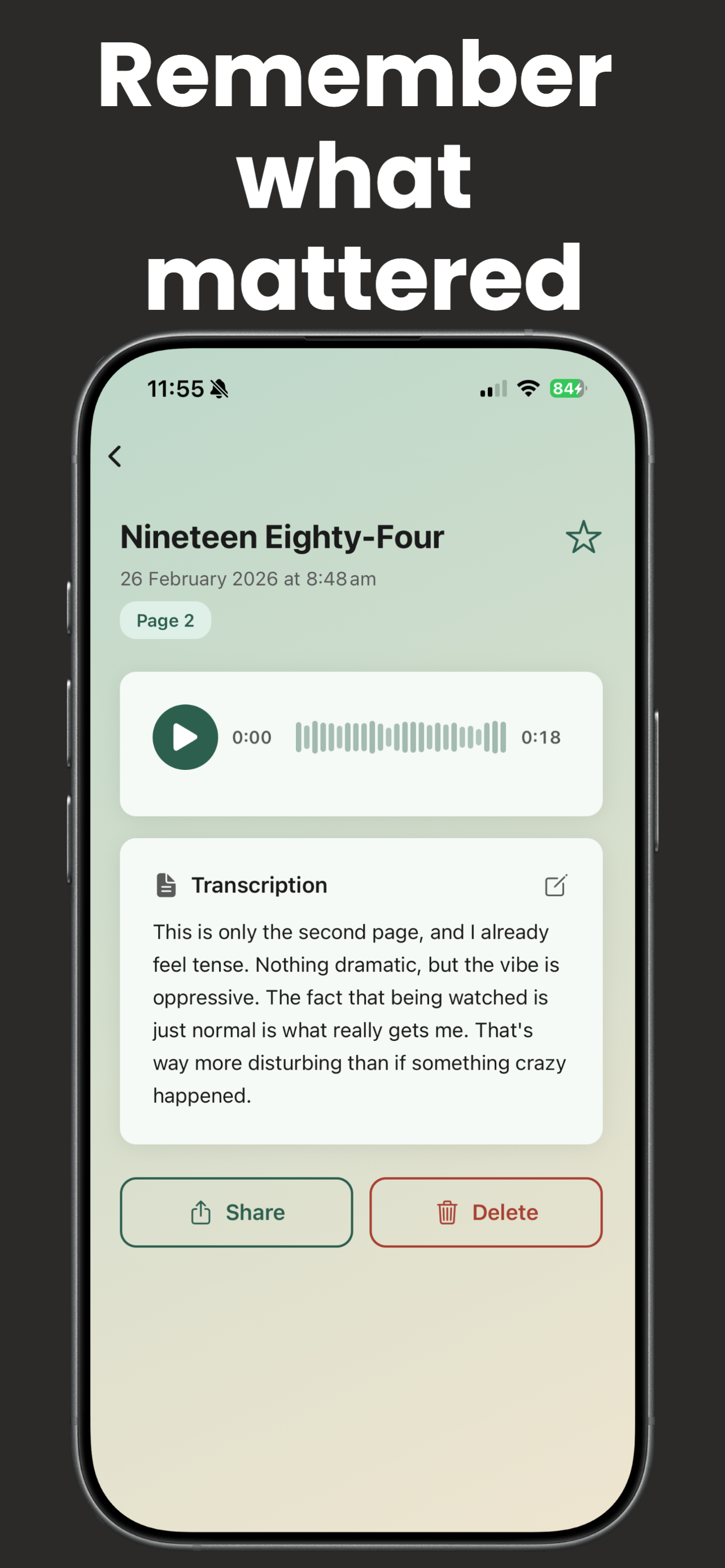
This isn't a memory failure. It's just how reading works. The thoughts you have at page 80 — the "oh this is what the first chapter was actually about" moment, the point where you clocked the twist coming, the line that made you put the book down for a second — those are the thoughts that make a review worth reading. They don't survive to the end of the book intact.
The fix isn't better notes. It's capturing thoughts in the moment, without interrupting the reading.
Voice capture is genuinely better than typing for this
Stopping to type a note while reading is annoying enough that you won't do it consistently. Lifting your phone, opening an app, typing a coherent sentence — by the time you've done that, you've lost the reading flow and you're not even sure the note was worth it.
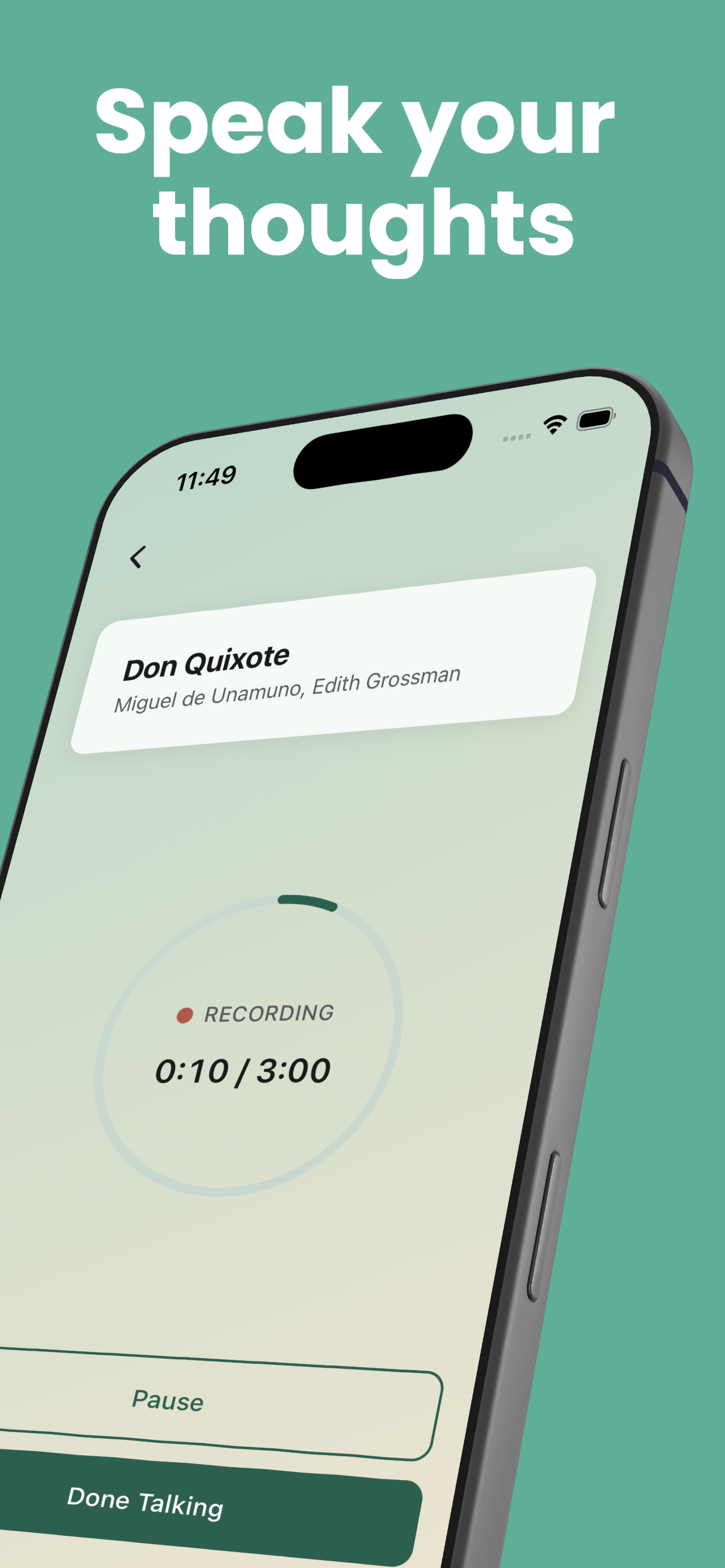
Talking is different. You can tap record, say "the pacing here is dragging, three chapters of the same argument", and be back reading in about eight seconds. It doesn't need to be articulate. It doesn't need to be a sentence. It just needs to exist so you have something to work from later.
Pick Up has a voice reflection feature built directly into reading sessions. You're already tracking the session — hitting record doesn't break anything. The audio gets transcribed automatically, so by the time you finish the book you have a rough transcript of every thought you had while reading it.
That is most of your review, already written.
What to actually capture (and what to skip)
You don't need to capture everything. Three to five voice notes across a 300-page ARC is enough for a solid review. The things worth capturing:
Your first impression past the opening. Not "I started the book." More like: "Okay the worldbuilding is dense, I'm not sure I have the context I need yet, might be a slow burn." This is useful because you'll either confirm it or reverse it by the end, and both make for a more honest review.
The moment your opinion locked in. There's almost always a point — maybe a quarter of the way through, maybe halfway — where you know how you feel. "This is a five-star read" or "I'm finishing this because I committed to it, not because I'm enjoying it." Capture that moment while it's happening, not in retrospect.
Any line or scene that made you react. Didn't like the dialogue? Loved the ending of chapter twelve? Say it out loud. You can quote it or reference it in the review later, and it gives the review that "this person actually read the book" quality that separates useful ARC reviews from filler.
Your finishing thought. Before you do anything else after the last page, record your immediate reaction. Not a polished take. Just whatever you actually think right now. That's usually the most useful thing in the whole review.
The deadline problem
ARC reading has a specific kind of stress that normal reading doesn't: you have a publication date bearing down on you and a review commitment attached to it.
The practical way to handle this is to work backwards from the deadline rather than forwards from where you are. If the book is 380 pages and you have 14 days, that's 27 pages per day. That's not a lot. The problem is usually not pace — it's fitting reading into the actual shape of your life.
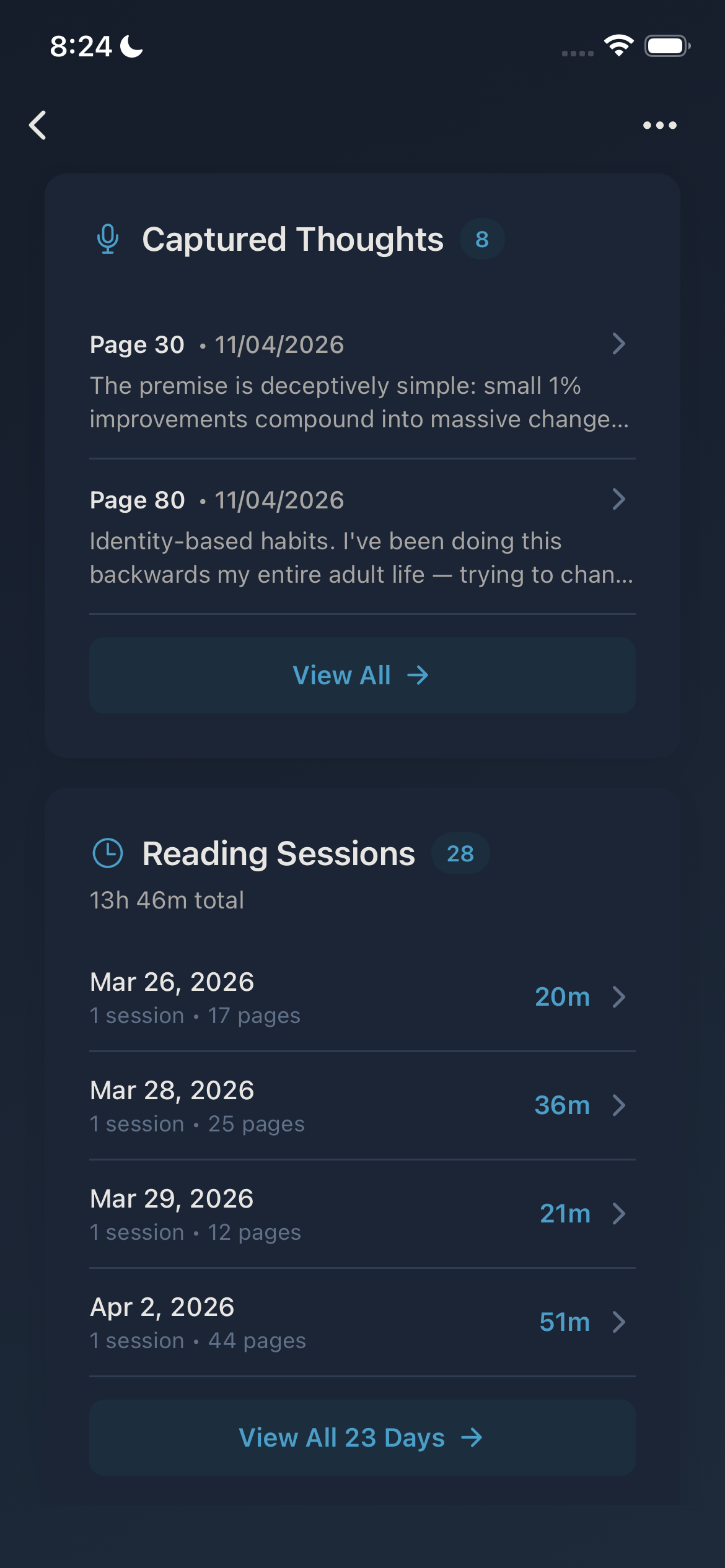
Pick Up tracks reading sessions automatically. After two or three sessions you can see your real pages-per-session average. That number is more useful than an abstract daily goal, because it accounts for how you actually read — some days you get an hour, some days you get fifteen minutes on your lunch break.
Managing multiple ARCs without losing your mind
If you have more than two ARCs running at the same time, the thing that goes wrong is context-switching. You pick up book three after two days on book two and you've lost the thread. The voice notes help here because re-reading your own reactions from the last session is faster than re-reading the chapters.
Keep your ARCs in a separate collection in your library. They're not the same as your regular reading — they have a deadline and a commitment attached. Treating them as their own category makes it easier to see at a glance what you're committed to and what's most urgent.
DNF is allowed
NetGalley's approval rate drops if you request books and never review them, but a DNF is still a review. "I didn't finish this and here's why" is valid feedback for a publisher. It's also honest.
If you're on page 100 and the book isn't working, mark it as abandoned and write the short version of why. ARC reviewers who DNF thoughtfully are more useful to authors than people who grind through 300 pages of resentment and leave a generic three stars.
The review actually writes itself
By the time you finish an ARC with a few voice notes captured, you have: your first impression, your mid-book opinion, one or two specific reactions, and your finishing thought. That's a review structure. Transcribe the notes, cut the filler, add a sentence about who you'd recommend it to, and you're done.
The part most people dread, the blank page after finishing the book, doesn't exist if you captured as you read.
Pick Up tracks reading sessions, captures voice reflections mid-session, and transcribes them automatically. Your ARC notes live in the same app as your reading. Download it here. Or if you already track your reading there, the Reading Journal at app.pickupreader.com turns your transcribed reflections into a publishable review.